

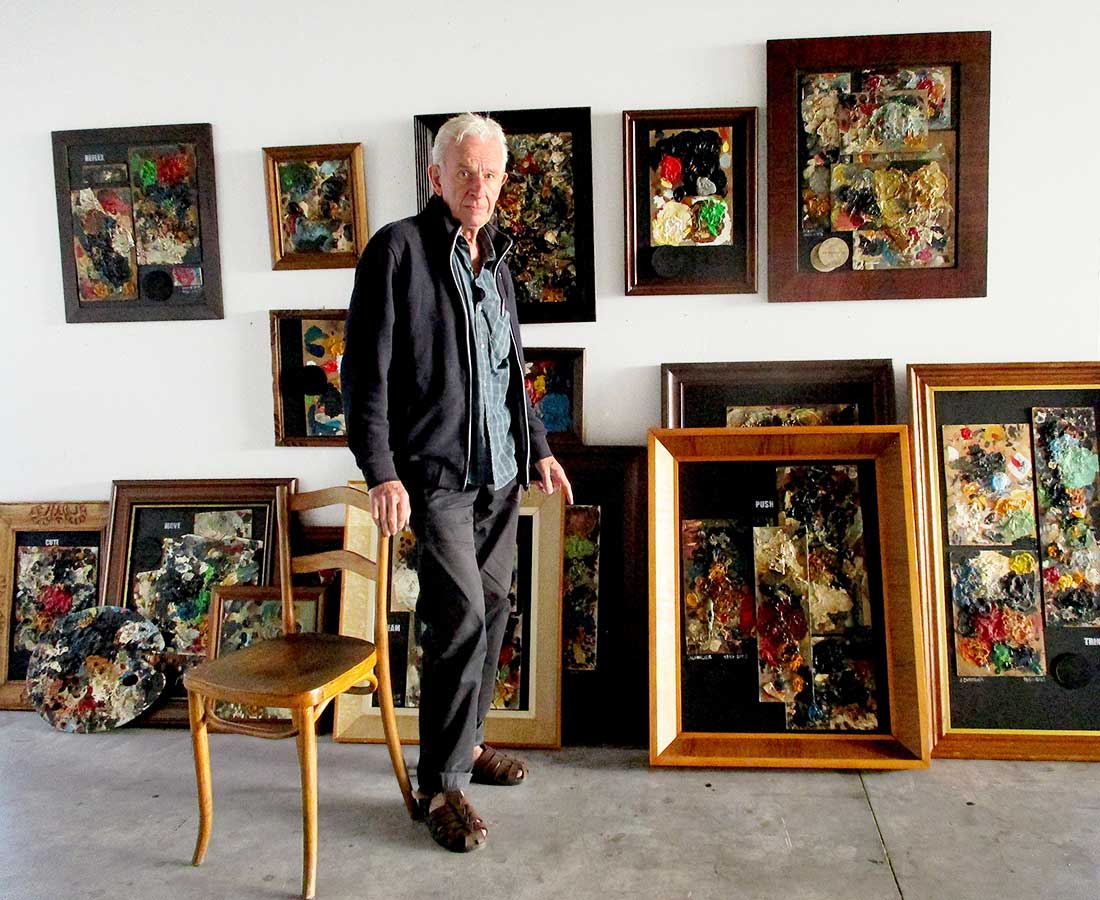
Jacques Charlier
L’AVANT- PEINTURE
September 18 - October 17, 2026
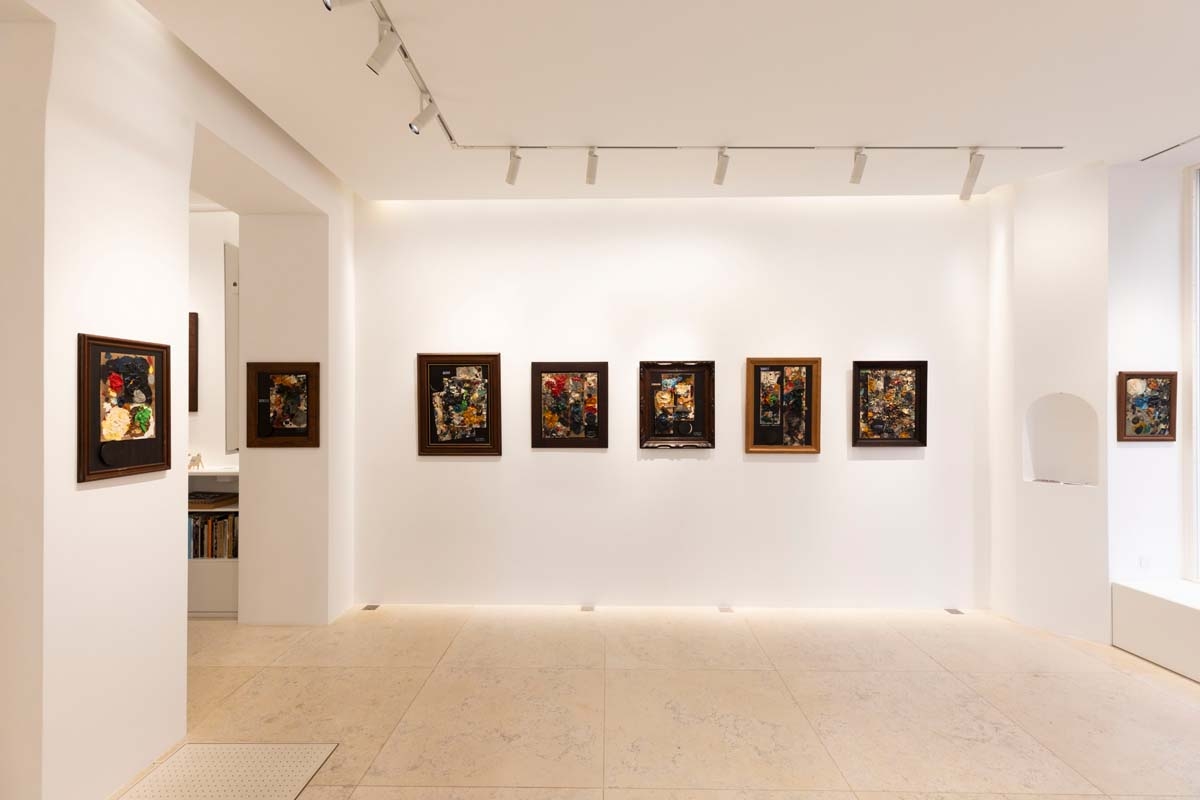
View of the exhibition, 2026
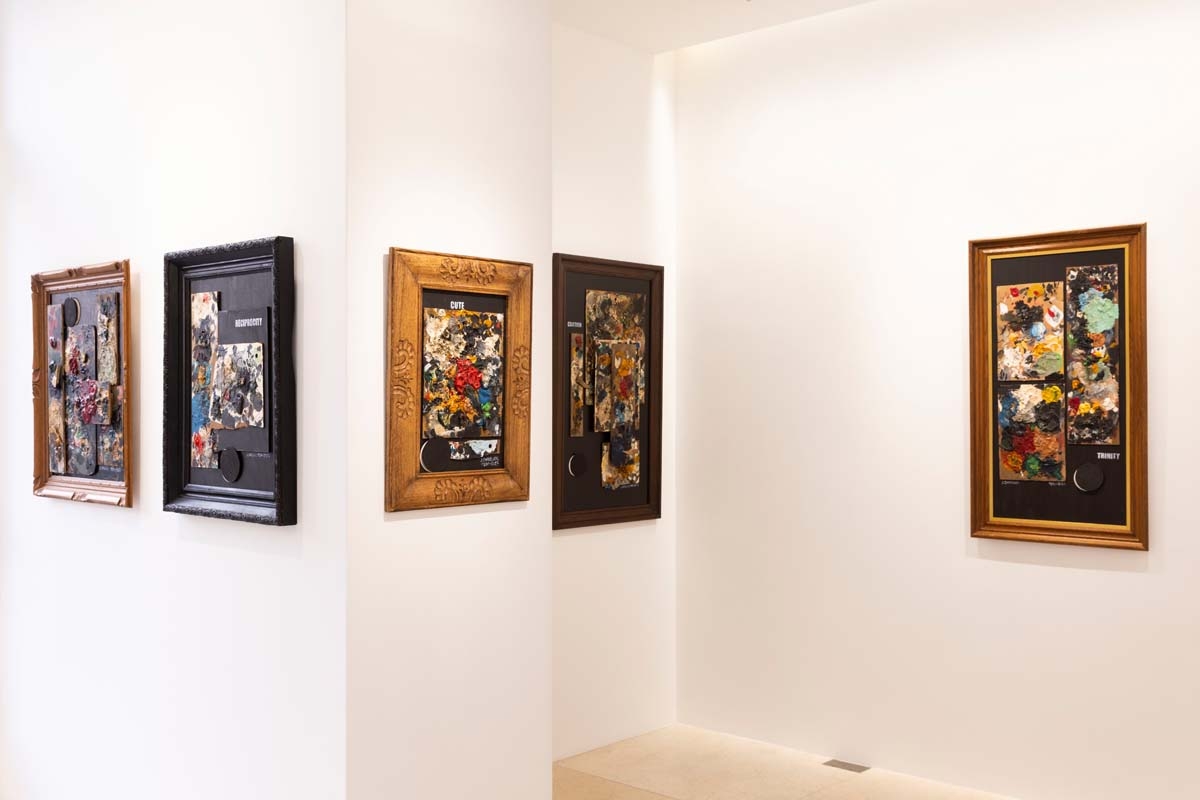
View of the exhibition, 2026
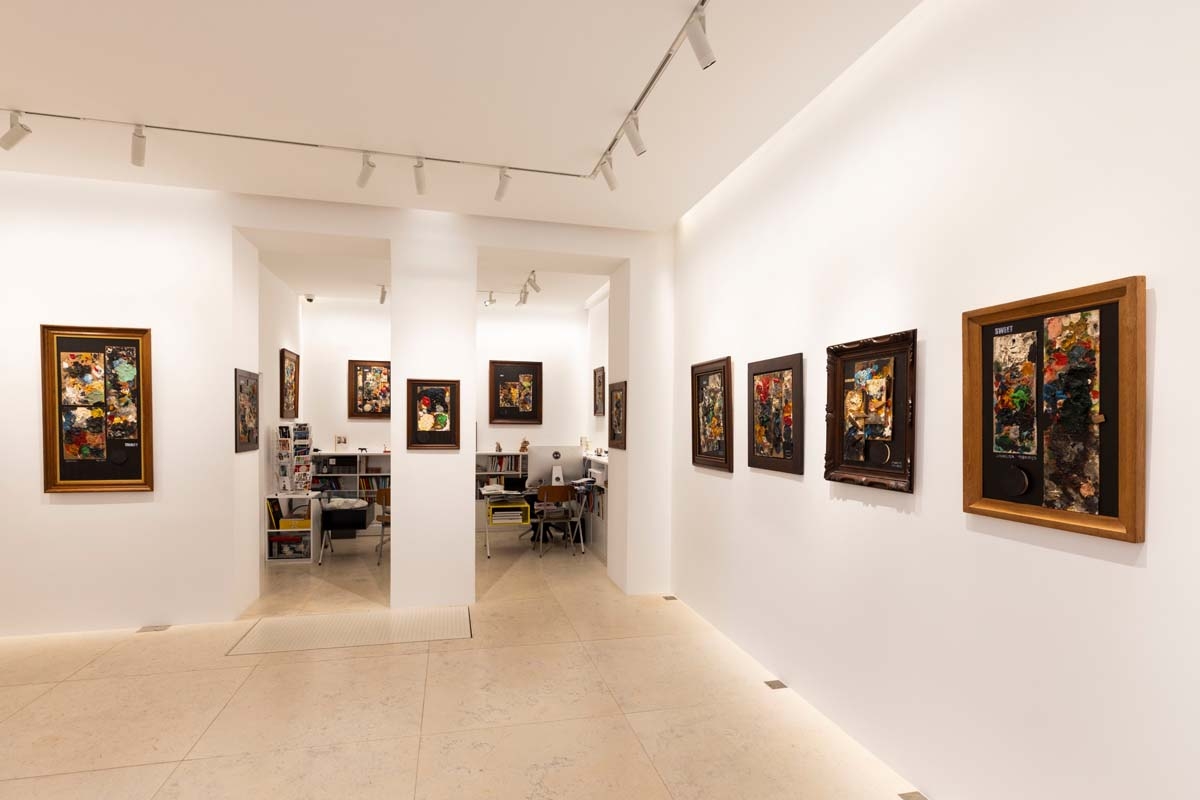
View of the exhibition, 2026
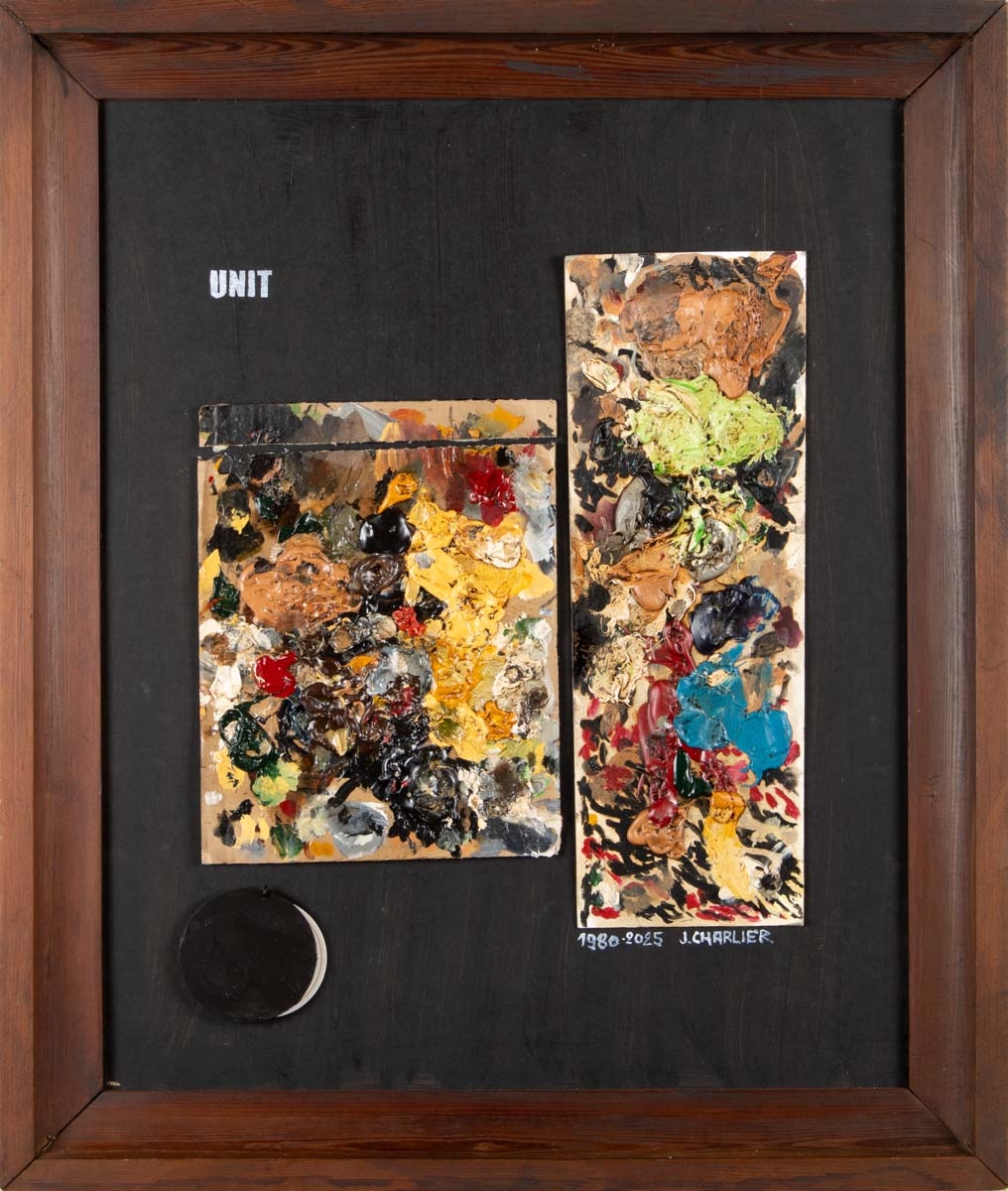
Peinture palette n° 14 UNIT, 1980/2025
88 x 73,5 cm
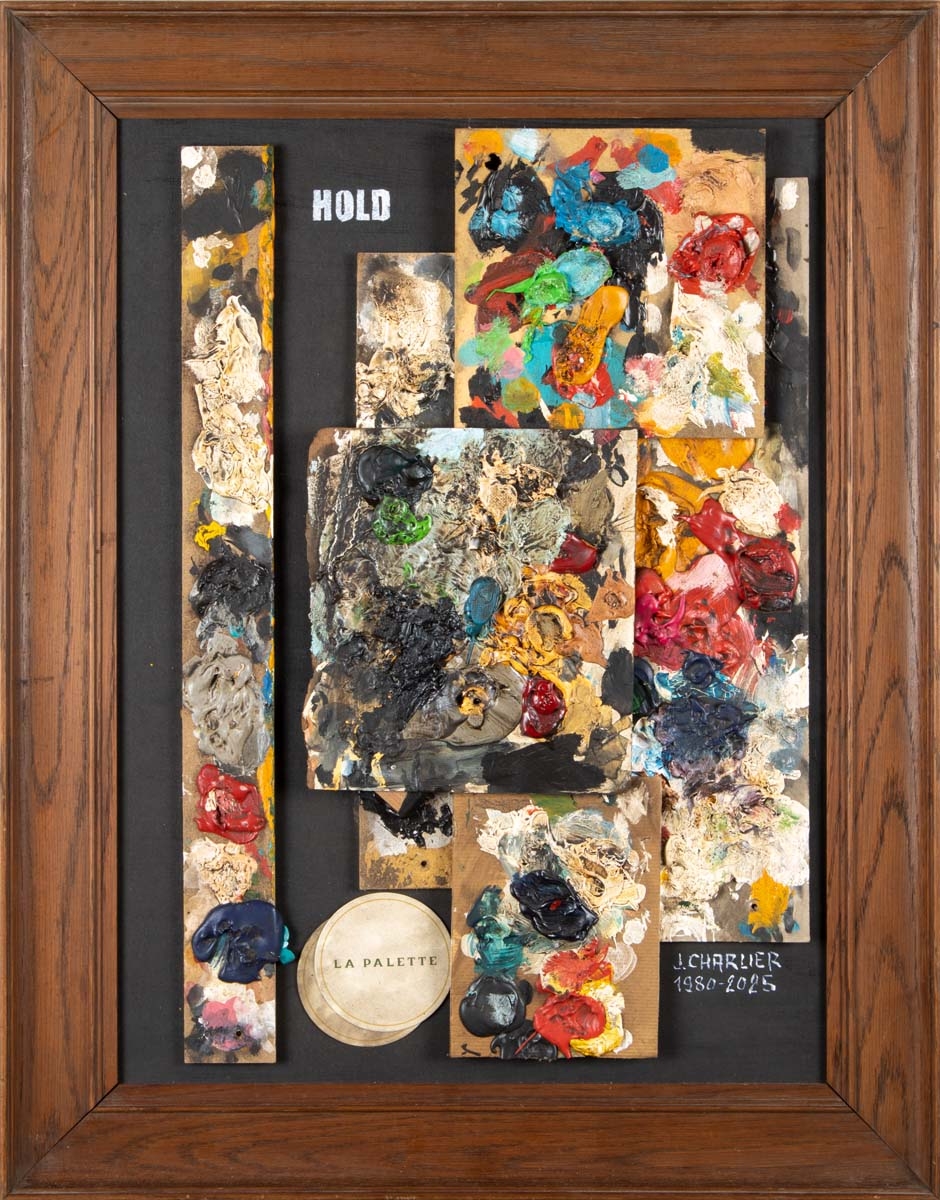
Peinture palette n° 18 HOLD, 1980/2025
77 x 60 cm
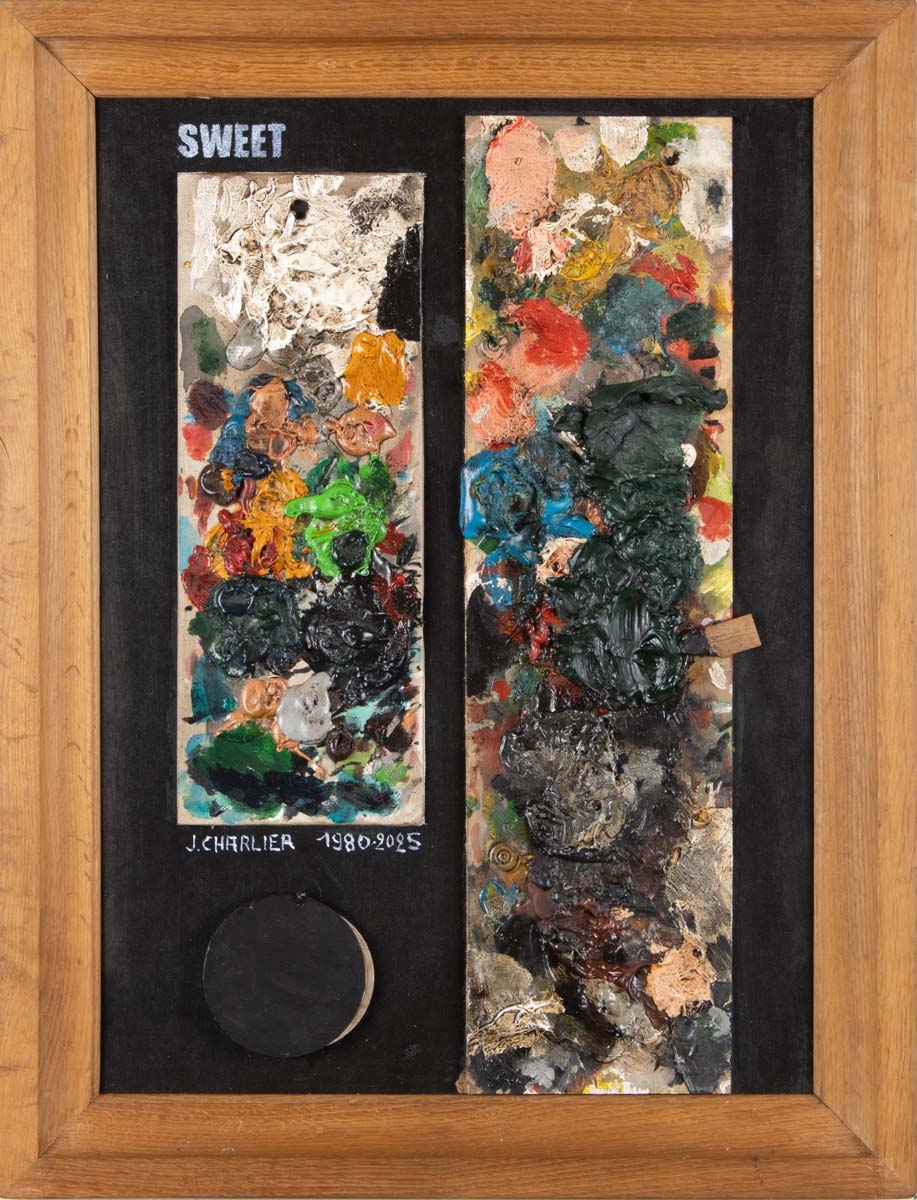
Peinture palette n° 17 SWEET, 1980/2025
73 x 56 cm
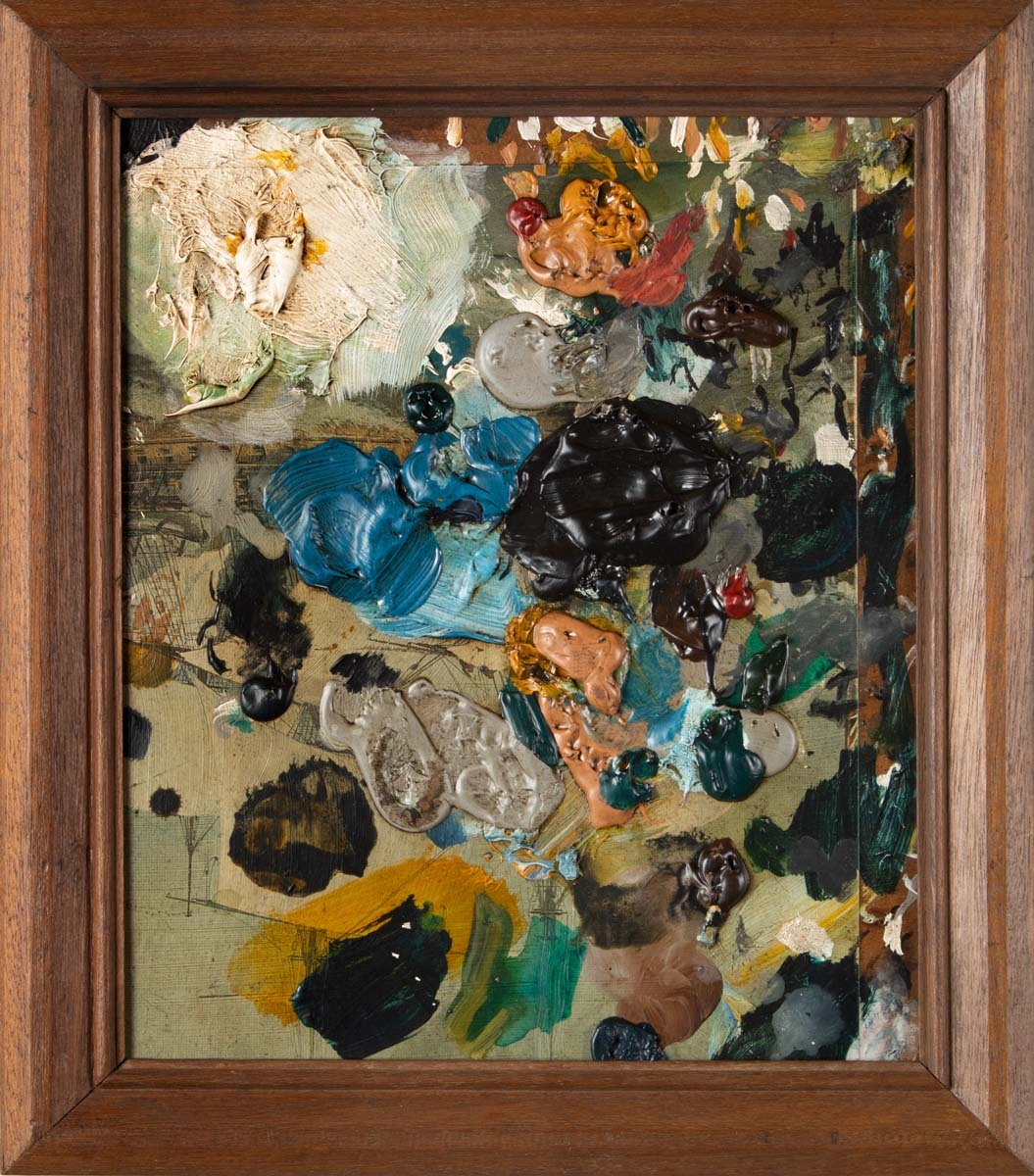
Peinture palette n° 3, 1980/2025
45,5 x 32 cm
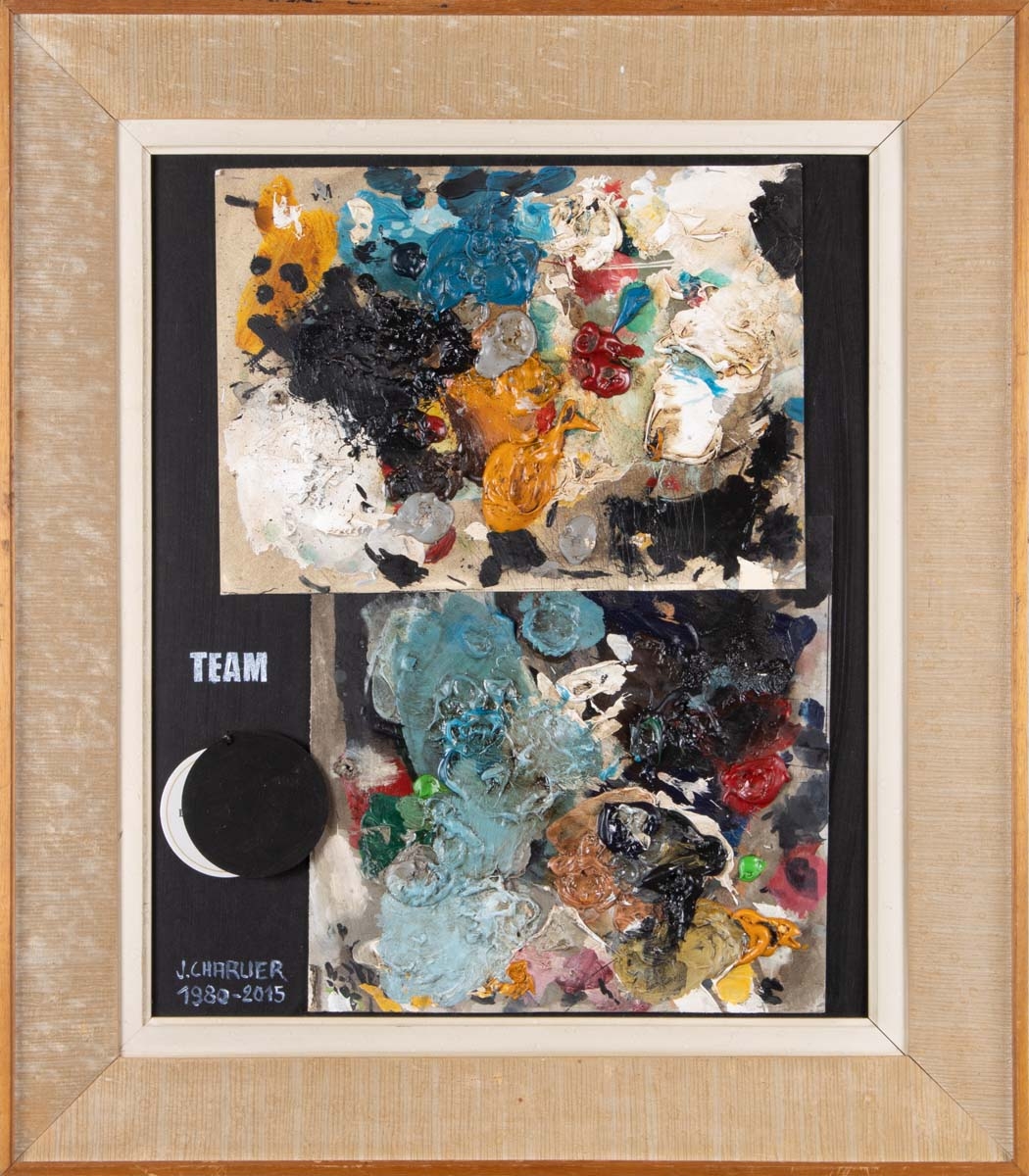
Peinture palette n° 13 TEAM, 1980/2025
79 x 69 cm
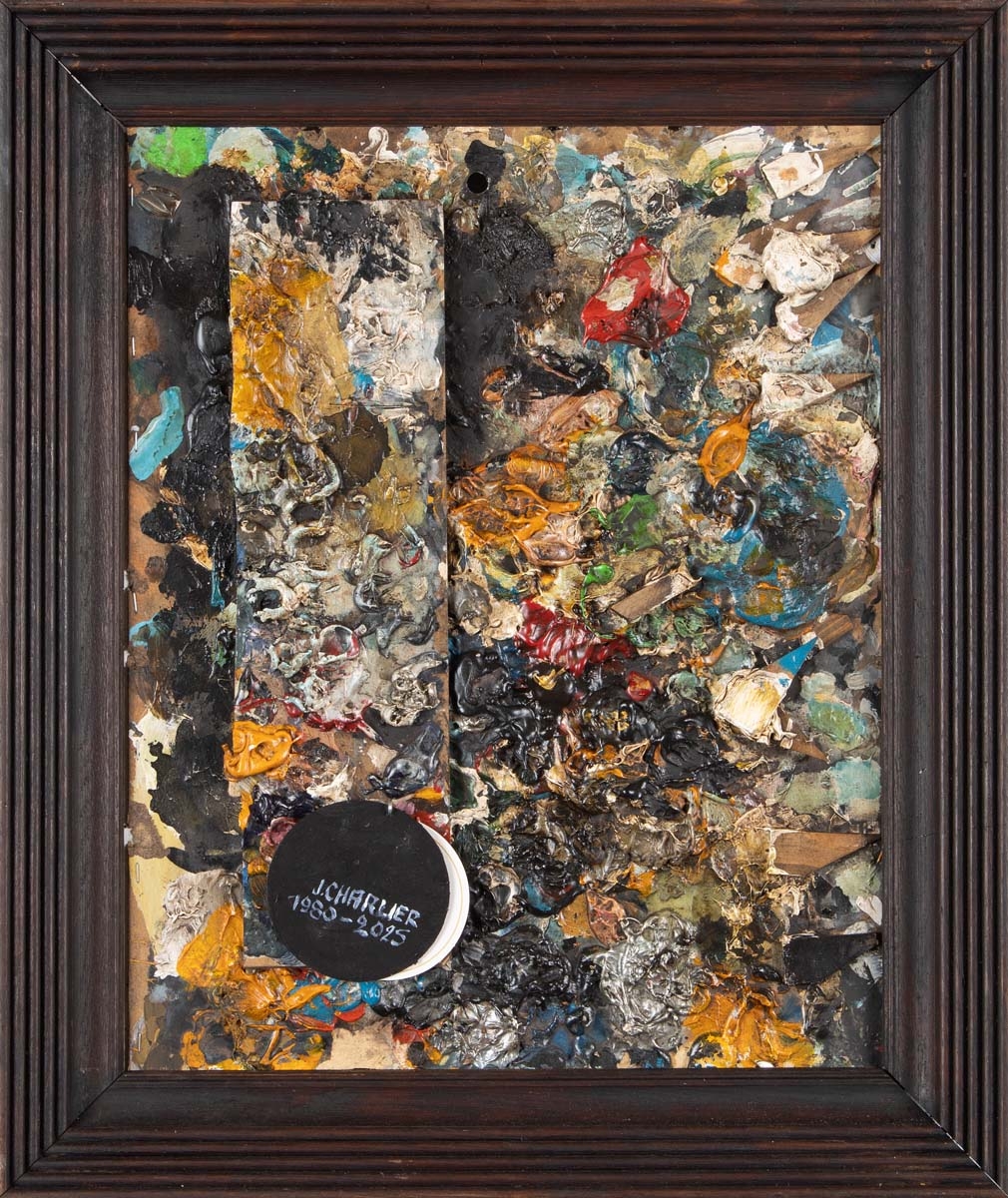
Peinture palette n° 8, 1980/2025
45,5 x 32 cm
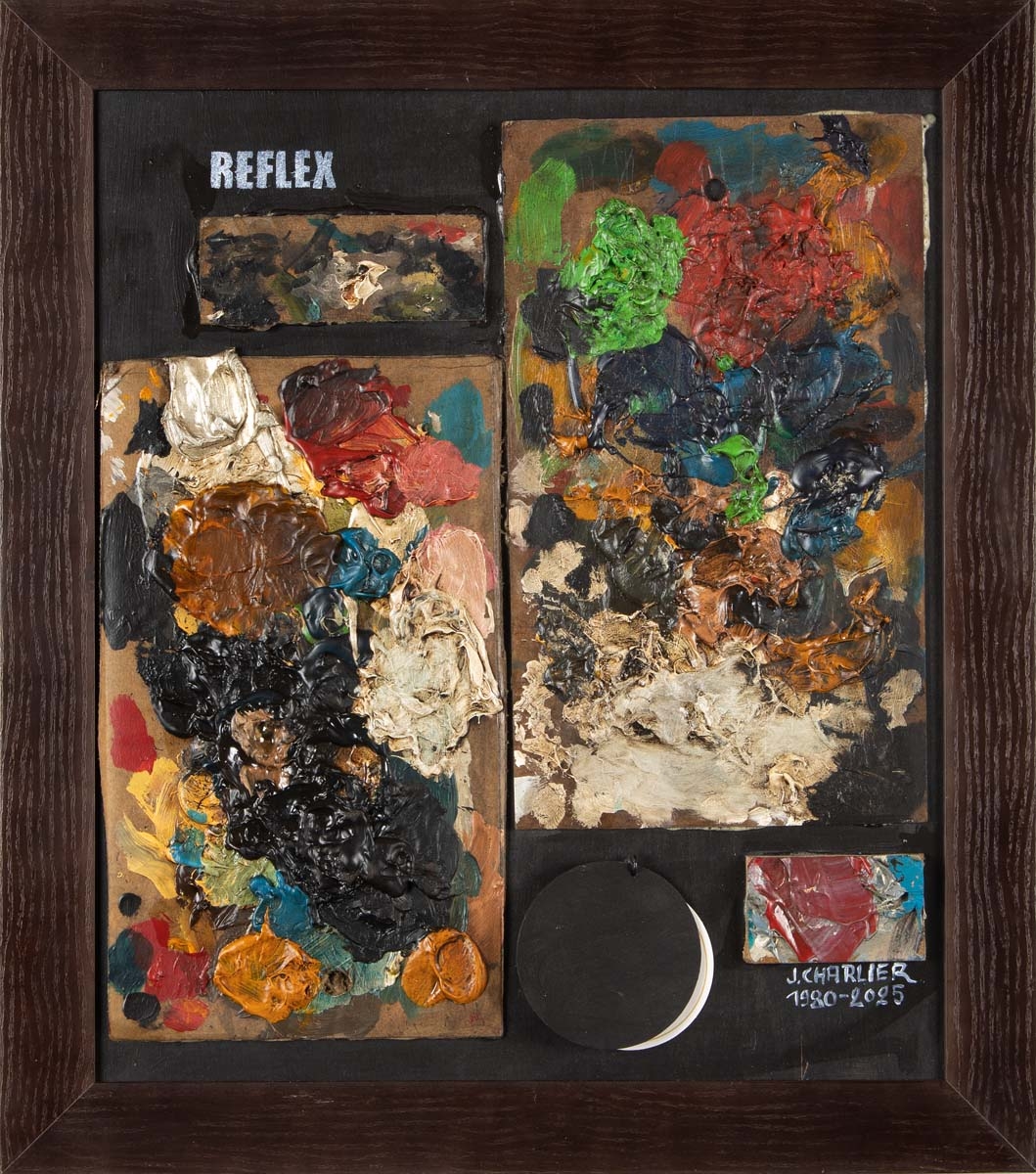
Peinture palette n° 7 REFLEX, 1980/2025
62,5 x 55 cm
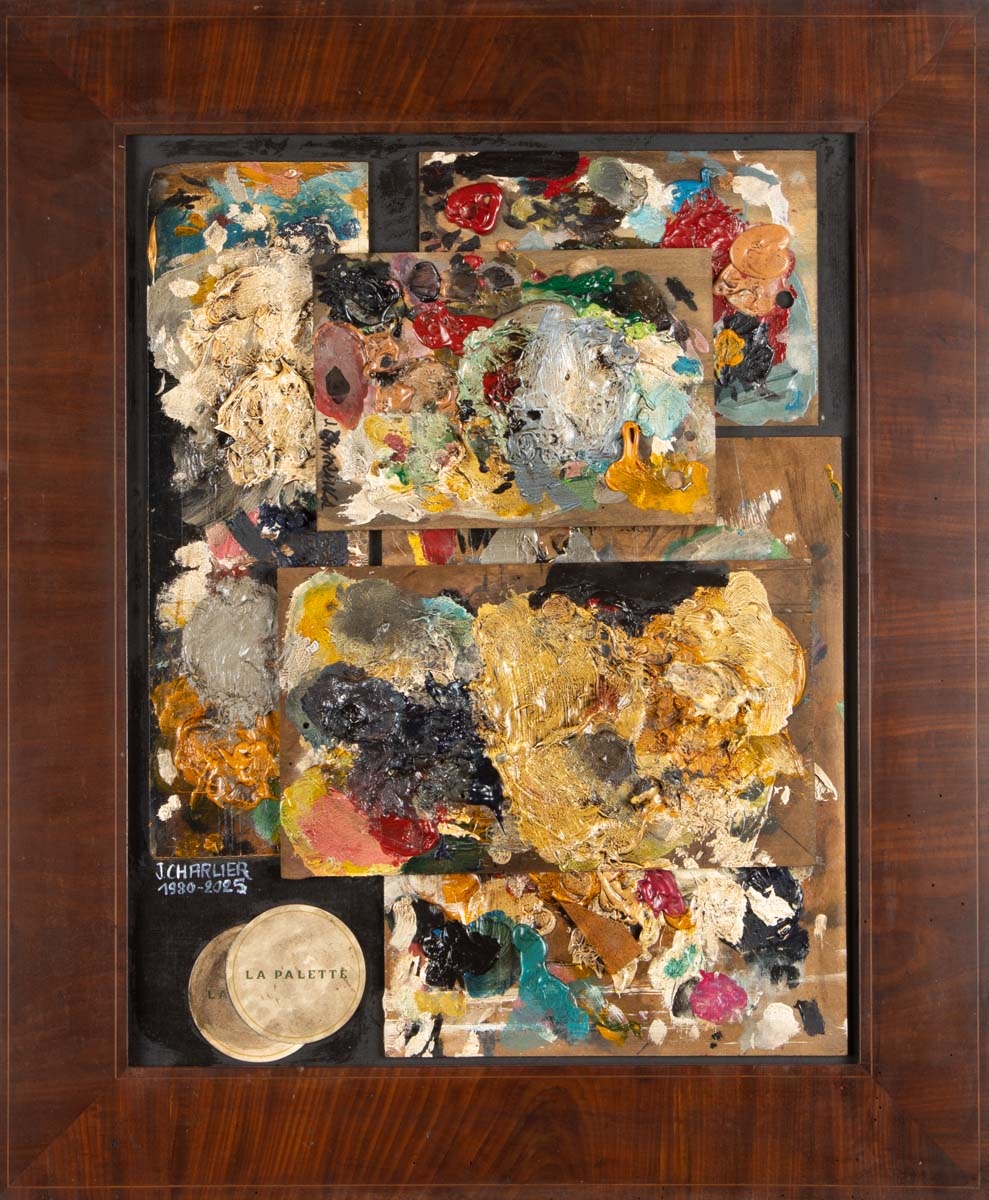
Peinture palette n° 25, 1980/2025
78 x 65 cm
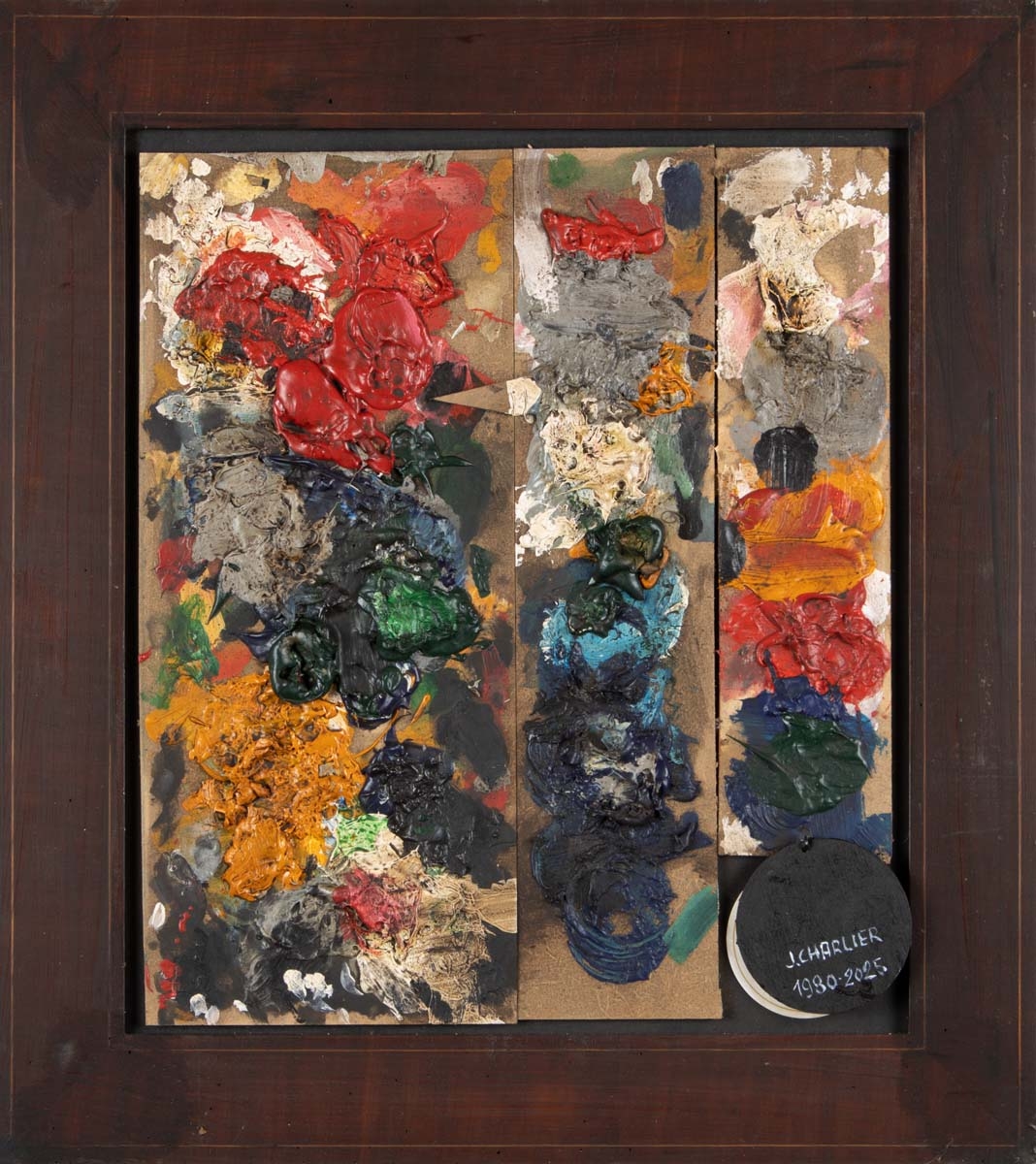
Peinture palette n° 23, 1980/2025
66 x 59,5 cm
L’AVANT - PEINTURE (BEFORE PAINTING)
QUARANTE ANS DE PALETTES (FORTY YEARS OF PALETTES)
Vice and Virtue are, for him, simply what colors on a palette are for a painter...
Pierre Dac
The before-painting is a decisive period because it precedes the attentive and considered gesture toward the canvas. It is quickly set aside, seen as secondary, merely preparatory. The palette is the accessory support for color, expressing nothing conscious. Simply a before-doing.
Without any preliminary intention, I kept my palettes for some forty years in cardboard boxes, thinking that one day I would get rid of them in bulk. The idea of making something out of them came to me while spending time at the café-restaurant La Palette, located next to Galerie Lara Vincy that represents me on Rue de Seine. The walls of this particular place are decorated with old palettes.
From the 14th century onward, the palette took on importance as a strategic tool. Its shape would vary between rectangular and oval forms. The arrangement of colors was sometimes numbered to make mixing and glazing easier. A hole was made to allow it to be held by the thumb. Sometimes there were several, depending on the area of the painting being worked on.
Historical palettes can be found in museums and private collections. Some have been auctioned and sold for considerable sums. Among the best-known preserved ones: those of Signac, Delacroix, Gauguin, Kandinsky, Chagall, Morisot, and Monet.
In this case, the palettes and fragments become elements arranged on a support suited for framing. The final ensemble gives the impression of being a painting that has always existed, which creates an unease that quickly becomes persistent.
The whole speaks to us of an earlier, premonitory time, capable of connecting with our own.
Jacques Charlier, 2026
Born in 1939 in Liège, Belgium.
Lives and works in Liège.
In Charlier's work, nothing is left to chance. A deep connoisseur of art history, he revisits it, questioning it with irony and a certain dark humor. Turning by turns to painting, photography, video, music, song, writing, sculpture, installation, comics, and advertising, he develops an approach underpinned by a critical analysis of the art world and of the various so-called "avant-garde" movements. The starting point of his work is the idea it seeks to convey. Before setting to work, he creates a scenario, like a director. His works are meant above all to provoke an attentive and critical gaze. He then builds his creation using several media, as long as they are ideal for the final object of his work. Taking a multidisciplinary approach, Jacques Charlier adapts his medium and style according to the idea. His parodies of the language of different styles and periods compel the viewer to continually revisit art history.
Having taken part in numerous international exhibitions, both solo and group, his works can be found in major private and public collections. He is notably present in the collections of Belgian museums of modern art in Antwerp, Brussels, Ghent, and Ostend, and French ones (FRAC Champagne-Ardenne, Île-de-France, Nord-Pas-de-Calais, and Pays de la Loire), as well as at the Mudam in Luxembourg.
L'AVANT-PEINTURE is Jacques Charlier's fourth solo exhibition at the Lara Vincy gallery, following Peintures en tous genres in 2017, Peintures irrésistibles in 2019, and Peintures cohérentes in 2023.